
 English
 Español
 Português
 Pусский


Why Does an Electric Actuator Overheat During Operation?
Learn how cycling, valve resistance, electrical conditions and the installa...

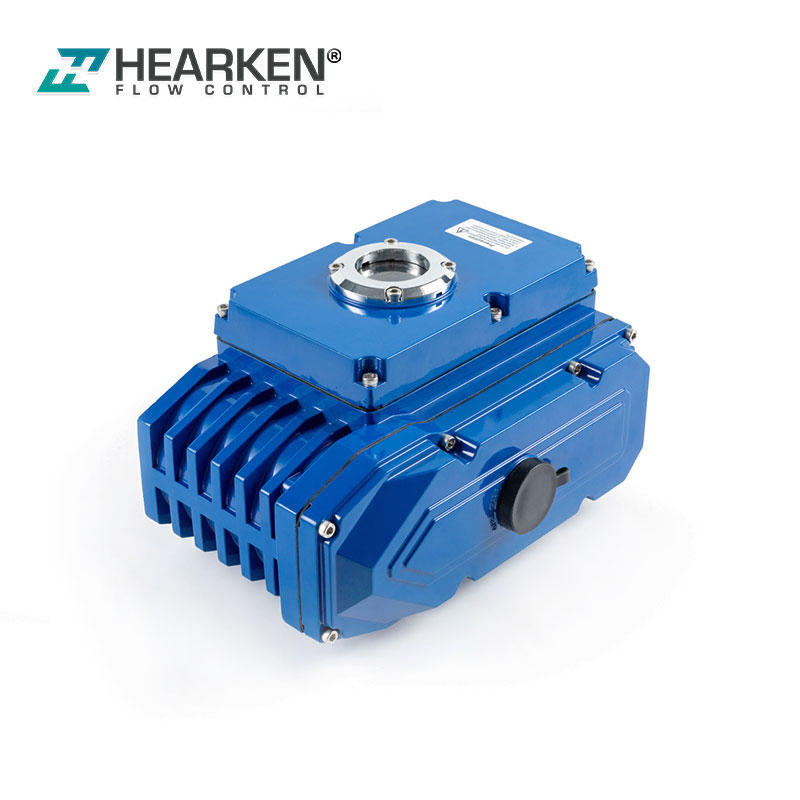


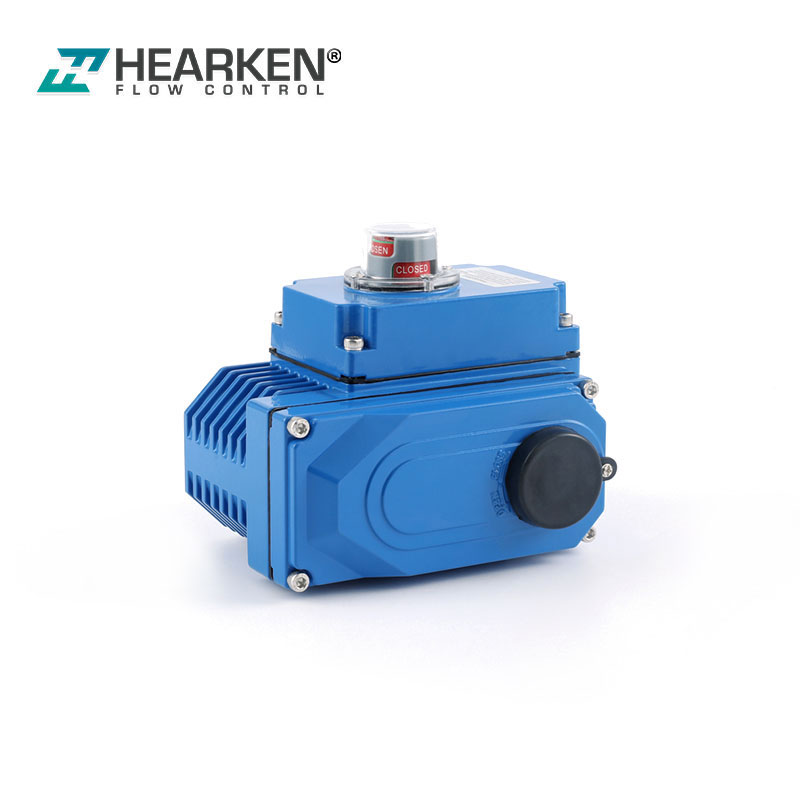
Hearken HEA small quarter turn electric actuator has high visible indicator which easy to check the valve position open or close. electric actuator are certified by ATEX, SIL,CE,IP67 etc…The actuator are available for on/off or modulating duty. Self locking reduction worm gear can hold last position if the power is off. It can be direct mounting on the different valves.
HEA Series Quarter-Turn Electric Actuator is used for controlling 0~270 degree Rotation valves and other similar products,such as butterfly valve,ball valve,damper,flapper valve,cock valve etc...lt widely applies to petroleum,chemical, water treatment,shipping,peper,making,power plant and other industries.
Drived by 380V/220V/110VAC OR 24V/110VDC Power,Inputs 4~20mA Or0~10 VDC control signal,Moves valve to the right position, and achieve to automatic control.The Maximum output toque is 2000 N.m
| Standard On/off Type | Modulating Type | Modulating Type with LCD Screen | Integrated Type |
 |
 |
 |
 |
| • Applications: Basic open/close valve isolation and shut-off automation for quarter-turn ball, butterfly, and plug valves. • Signal Input: Direct AC/DC power supply lines (220VAC, 110VAC, 24VDC, or 380VAC 3-Phase) drive the motor directly. • Signal Output: 2 primary travel micro-switches plus 2 built-in passive auxiliary dry contacts (SPDT, 250VAC 10A) for remote fully open and fully closed status feedback. |
• Applications: Proportional flow throttling, pipeline balancing, and continuous modulating control. • Signal Input: Proportional analog control signal (4–20mA DC or 0–10VDC) with 250Ω input impedance. • Signal Output: Low-drift continuous 4–20mA DC valve position feedback signal with 2000V optical isolation. |
• Applications: Precision valve positioning with real-time on-board visual status monitoring, diagnostics, and quick shop-floor calibration. • Signal Input: 4–20mA DC / 0–10VDC analog input, or 3-channel isolated switch inputs (Remote Open, Close, and Hold). • Signal Output: 4–20mA DC position feedback plus relay feedback outputs for Fault alarm, Remote status, and Open/Close limit signals. |
• Applications: Centralized SCADA/DCS plant networks, multi-device fieldbus loops, and non-intrusive commissioning in harsh outdoor environments. • Signal Input: 4–20mA analog signal, discrete pulse control. Includes automatic 3-phase sequence correction and phase-loss protection. • Signal Output: Real-time 4–20mA feedback, Modbus telemetry registers (valve %, internal temperature, torque status), and passive alarm fault contacts. |
Designed for small quarter-turn applications.
Protection class to IP67, NEMA4 and 6
The Actuator can automate the valves requiring up to 270 degree rotation.To help protect the components and extend the actuator's life, an anti-condensation A thermal protector is provided to protect the motor from over heating.
|
Feature & Technical Spec |
Engineering & Buyer Advantage (For OEMs & Distributors) |
|
|
Standard ISO 5211 Direct Mounting & Double-Square Drive The bottom mounting flange complies with ISO 5211/DIN 3337 standards (sizes F03 to F12). We use dual internal star/square valve-stem drive interfaces (size range: 9×9 mm to 27×27 mm) and offer a round-keyed shaft option. |
You can mount on quarter-turn ball valves, butterfly valves, and plug valves directly without expensive brackets or custom couplings. Our HEA actuator also supports both straight (0°) and 45° mounting, reducing mount time by up to 50%. |
|
|
Dual Travel Limits and Built-in Auxiliary Signal Contacts Hearken Flow HEA actuators use an internal microswitch (SPDT, 250 VAC, 10 A) featuring color-coded cams, as well as two auxiliary passive contacts for remote “on/off” status feedback; features an externally adjustable mechanical limit bolt (travel adjustment range: ±5°). |
“On/Off” confirmation signals can be sent directly to the PLC/DCS without the external limit switch box; the dual mechanical limit design avoids excessive torque from damaging the valve’s soft seals and packing. |
|
|
High-Efficiency Self-Locking Worm Gear Transmission We use the precision alloy steel worm shaft and aluminum bronze worm wheel drive mechanism to provide a mechanical self-locking function to avoid reverse rotation caused by reverse flow of the medium or pressure surges. It operates at low noise levels of ≤50 dB and is lubricated with long-life extreme-pressure (EP) grease. |
During power outages or pipeline pressure fluctuations, the valve remains securely locked in the 0° or 90° position without any positional drift. No periodic lubrication is required, making it 100% maintenance-free. |
|
|
Class F Motor with Auto-Reset Thermal Overload Protection Hearken Flow HEA actuators use High-torque, low-inertia, fully enclosed squirrel-cage motors with Class F insulation. The built-in thermal protector trips at 120°C ± 5°C and automatically resets when the motor cools down to 97°C ± 5°C. |
The thermal overload protection helps avoid motor burnout caused by unexpected valve seat jamming, frequent start-stop cycles, or incorrect wiring, greatly reducing the risk of warranty claims and associated costs. |
|
|
Anti-Condensation PTC Space Heater An optional 5W–10W PTC heater is available (supports 220VAC, 110VAC, and 24VDC voltages). The space heater automatically regulates the internal temperature to keep electronic components and microswitches dry. |
The space heater avoids internal moisture condensation and short-circuit failures caused by extreme fluctuations in temperature between day and night when installed outdoors or in tropical or cold climates. |
|
|
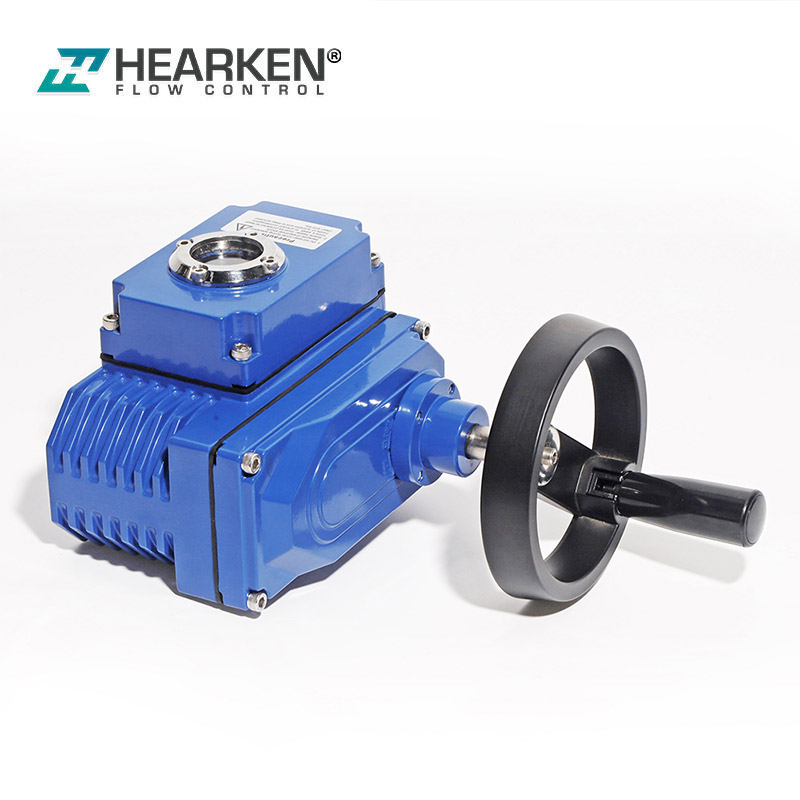
Safe and Convenient Manual Operation Includes an external hex spanner/lever mechanism stored securely in a dedicated housing clip (optional handwheel available for large sizes). |
You can quickly adjust the position manually or test the valve quickly during commissioning or an unexpected power outage without disassembling the actuator. |
|
|
Optional Extended Angles (180° / 270°) & Modulating Hearken Flow HEA series rotary electric actuator supports a standard 90° stroke, as well as optional 180° and 270° multi-position strokes suitable for three-way and four-way directional control valves. Also available with proportional modulating cards (4–20mA / 0–10V) or RS485 Modbus RTU bus control. |
You can meet standard on/off control requirements while easily offering extended stroke and smart modulating from a single supplier to address complex project requirements. |
You may encounter some operational challenges during mechanical assembly and electrical commissioning. Below is a troubleshooting checklist and routine maintenance procedures we have provided to help you quickly diagnose and resolve issues.
|
Problem |
Possible Cause |
How do we solve it? |
|
Motor does not rotate or stops running with power connected |
Internal thermal protector tripped due to continuous high-duty cycling or mechanical overload (which cuts off power at 120°C ± 5°C); loose supply wiring terminals or line voltage drop exceeding ±10%. |
All Class F motors equipped on HEA actuators feature built-in automatic reset thermal overload protection: the power is automatically cut off when the temperature reaches 120°C and automatically resets once the temperature drops below 97°C. We advise using a multimeter to measure the line voltage at the power supply terminals and using the manual handle to check whether the valve rotates smoothly and freely. |
|
Actuator rotates in the opposite direction of valve travel |
The “Open” and “Close” control wires are reversed on single-phase AC/DC models, or the phase sequence is incorrect for 380V/440V three-phase power supplies. |
For single-phase 110V/220VAC and 24VDC models, we suggest swapping the control wires for Terminal 2 (Open) and Terminal 3 (Close). For 380VAC 3-phase actuators, disconnect power and exchange any two phase wires (U/V/W); on KZQ digital HEA series actuators, rotation direction can also be changed directly via software parameters without rewiring. |
|
Valve fails to seal completely (seat leakage) or actuator over-travels past 0°/90° |
The internal limit switch cam has shifted or is not securely locked by the lock nut; the external mechanical limit bolt is improperly adjusted. |
Our HEA series rotary electric quarter-turn actuator uses a dual-limit design (mechanical and electronic limits). We advise manually positioning the valve to the fully closed or fully open position, loosening the cam lock nut, rotating the color-coded cam (red for Close, Yellow for Open) until you hear the microswitch click, tightening the lock nut, and finally turning the external mechanical limit bolt back two full turns. |
|
Motor hums or triggers stall alarm ("Err3/Err4" / Block Error) |
Debris in the pipeline jams the valve disc or ball, valve stem packing is too tight, or external mechanical limit bolts are set too far inward. |
We have built a real-time stall diagnosis function into the KZQ controller. When the torque is higher than the set value, the HEA actuator automatically stops the motor to avoid damage to the gears or valve stem. We suggest you use the manual handle to check the valve’s mechanical torque, remove any debris from the pipeline, and loosen the external mechanical limit bolts appropriately. |
|
Actuator continuously hunts or oscillates around the setpoint in modulating mode |
The deadband parameter “d” is set too narrow (below 0.4%); there is electrical noise in the analog signal line; or there is mechanical backlash at the valve stem connection. |
In environments with severe vibration or significant electrical noise, we suggest increasing the deadband parameter “d” to 0.5%–1.5% via the menu. Additionally, we also advise using shielded twisted-pair signal cables with a single-point ground connection and ensuring there is no backlash at the valve stem connection. |
|
Position feedback error or "Err12" displayed on KZQ controller |
Potentiometer feedback wiring loose, potentiometer resistance overrun, or absolute encoder gear teeth dislocated. |
We suggest checking that potentiometer terminals (0%, RV, 100%) are securely connected. When the valve is at 90° full open, use a multimeter to measure the resistance. Adjust the potentiometer drive gear so that the reading falls between 350 Ω and 600 Ω, then lock it in place. |
|
The KZQ module displays “Err10” or “Run Range Error” during calibration. |
The stroke difference between the calibrated fully closed position (uL) and the fully open position (uH) is too small (uH - uL < 150). |
This safety error is designed to prevent invalid short-stroke operations. We advise manually rotating the valve to the fully closed (0°) and fully open (90°) positions to ensure a full mechanical stroke, and then re-running the one-touch automatic calibration procedure (press and hold the UP and DOWN buttons at the same time for 3 seconds). |
|
Actuator moves to unexpected position when 4–20mA control signal is lost |
The fail-safe (signal loss) parameter is configured as “Fail-Open” (I=1) or “Fail-Close” (I=3), rather than “Hold” (I=2). |
Hearken Flow offers three preset fail-safe actions for control signal interruptions: Hold, Fully Open, or Fully Closed. We can preset this logic at the factory, or you can update the “I” parameter directly via the keypad menu or infrared remote control. |
|
KZQ LCD displays "Err2" / "OverHeated Error" (Internal Over-Temperature) |
The ambient temperature exceeds 80°C, the operating frequency is too high, or the internal overheating alarm threshold “t” is set too low. |
Our HEA modulating actuator modules have built-in temperature sensors. If fluid temperature exceeds 65°C, we suggest installing a medium- or high-temperature mounting bracket to isolate pipe heat and ensure parameter "t" is set within 70°C–80°C. |
|
RS485 Modbus RTU Communication Timeout or No Response |
Modbus slave address conflict, baud rate mismatch, or reversed A(+) / B(-) communication polarity. |
We advise verifying each HEA actuator on the RS485 loop has a unique slave address (Menu 1.6.1 / Parameter Ad), setting the master and slave baud rates to match (default 9600 bps), and verifying terminal A(+) and B(-) polarity. |
|
Remote open and close signals are triggered at the same time ("OP&CL.SIG.ON") |
The external PLC or relay logic closes the passive contacts for the remote “On” and remote “Off” signals at the same time. |
When a dual-action command is received, the controller stops the motor to prevent circuit conflicts. We suggest reviewing the external PLC program and implementing electrical or software interlocks to ensure the “ON” and “OFF” signals are not activated at the same time. |
To maximize the service life of the HEA series rotary electric quarter-turn actuators and ensure the long-term, trouble-free operation of your valve automation system, we suggest you follow these routine maintenance guidelines:
Quarterly Valve Operation Procedures:
For emergency shut-off valves or isolation valves that remain in the fully open or fully closed position for extended periods, a complete opening and closing test cycle should be performed 1 to 2 times every 3 months. This is intended to prevent valve seat sticking and to verify the integrity of the mechanical linkage.
Enclosure Sealing & Cable Gland Inspection (Every 6–12 Months):
Inspect all stainless steel cover plate mounting screws to ensure they are tightened to a uniform torque. Inspect the dual conduit entries (M18 / NPT 1/2) and cable gland connections to ensure they are watertight, thereby maintaining the certified IP67 protection rating.
Manual Override Function Check:
During scheduled maintenance downtime, disconnect the main power supply and use a manual hex wrench (or the optional handwheel) to operate the valve through its full stroke. Verify that manual rotation is smooth, without any eccentricity, and that there is no mechanical binding.
Continuous Operation of the Space Heater:
For the actuator installed outdoors, at sea, or in high-humidity environments where there are significant daily temperature fluctuations, keep the optional 5W–10W PTC space heater powered on continuously to prevent condensation from forming inside the unit, thereby protecting the terminal blocks and microswitches.
Inspection of Terminal and Fastener Tightness:
In environments where piping is subject to severe vibration, regularly inspect and verify that the screws on electrical terminal blocks and the bolts on mounting flanges (ISO 5211 standard) are fully tightened to prevent signal interruption or physical displacement.
|
Function: |
On/off or modulating |
|
Material |
|
|
Housing: |
Aluminum alloy, epoxy powder coated |
|
Gear: |
Steel/aluminum bronze |
|
Screws: |
Stainless steel |
|
Indicator Cover: |
Polycarbonated |
|
Shaft/Adaptor: |
Alloy steel |
|
Seal: |
NBR |
|
Lubrication: |
Aluminum-based grease |
|
Technical Date |
|
|
Power Supply: |
24VDC,110VAC,220VAC |
|
Motor: |
Squirrel cage asynchronous motor |
|
Limit Switch |
SPDT,250VAC 10A, each for open and close positions |
|
Rotation: |
90° (±10°), other rotation on request |
|
Manual Operation: |
Mechanical handle standard |
|
Conduit Entry: |
2 x M18 |
|
Operating Temp: |
-20°C to + 70°C |
|
Ambient Humidity: |
Max.90%RH |
|
Vibration Tested: |
XYZ10g,0.2~34Hz,30 minutes |
|
Mounting: |
ISO5211 |
|
Torque Output: |
30Nm to 1000Nm (2000Nm on request) |
|
Self-locking device: |
Self-locking by worm and worm gear |

| Space Heater, 7 ... 10W (110/220VAC)* |
| Stall Protection, internal overheating protection, open @ 120oC / close @ 97oC (± 5oC)* |
| Position Feedback Potentiometer (1K ... 10K)* |
| Position Feedback Sensor with Current output (4 ... 20mA)* |
| Proportional Control Unit for modulating control (input/output signal, 4 ... 20mA, 1 ... 5 VDC, 1 ... 10VDC)* |
| Field control unit (Local control open/stop/close switch, Local/remote control switch)* |
| Power Failure Self Reset |
| Indicator | Dome Type( Option: LED Light Inside) | Enclosure | Waterproof Level IP67,NEMA4 and 6 | |
| Ambient Temp | -20℃~+70℃ | Power Supply | AC110/220V 1PH±10% 50/60HZ.DC24V | |
| Limit Switches | 2 open/close+dry contact 2 open/close | Travel Angle | 90º±5°(Extension up to 270º) | |
| Manual Operation | Hex key (Option: Handwheel) | Self Locking | Provides self-locking by worm gear | |
| Space Heater | 5W(110/230VAC,24VDC) | Conduit entries | 2PF 1/2''(Option:M20x1.5,NPT1/2'') | |
| Lubrication | Aluminum base grease(EP type) | External Coating | Dry powder, epoxy polyester | |
| Surface Treatment | Anodizing | Material | Aluminum Alloy, Steel, Alloy Bronze |
All actuators manufactured by HEARKEN are individually tested. Testing is carried out to check for leakage in both internal and external. The angle of rotation and Torque values. All bodies are stamped with the year, month of production, size, and serial number.


|
Model |
Max Output Torque (N.m) |
Operating Time 90°(Sec.) |
Drive Shaft(mm) |
Motor (W) |
Single-phsae rated current(A) 220VAC/24VDC |
Weight (kg) |
Flange Size |
|||
|
Square |
Deep |
Round |
Deep |
|||||||
|
HEA003 |
30N.m |
10// |
9X9 |
13.5 |
Ø12.6 |
26 |
8 |
0.15// |
2.5 |
F03/F05 |
|
11X11 |
15.5 |
|||||||||
|
HEA005 |
50N.m |
30/15 |
11X11 |
15.5 |
Ø12.6 |
26 |
10 |
0.25/2.2 |
4.1 |
F05/F07 |
|
14X14 |
18 |
|||||||||
|
HEA008 |
80N.m |
30/15 |
11X11 |
15.5 |
Ø15.78 |
26 |
10 |
0.25/2.2 |
4.1 |
F05/F07 |
|
14X14 |
18 |
|||||||||
|
HEA010 |
100N.m |
30/15 |
14X14 |
18 |
Ø15.78 |
28 |
15 |
0.35/3.5 |
5.1 |
F05/F07 |
|
17X17 |
22.5 |
Ø 18.95 |
||||||||
|
HEA015 |
150N.m |
30/15 |
14X14 |
18 |
Ø18.95 |
28 |
15 |
0.37/3.5 |
5.1 |
F05/F07 |
|
17X17 |
22.5 |
|||||||||
|
HEA020 |
200N.m |
30/15 |
22X22 |
26 |
Ø22.13 |
45 |
45 |
0.3/7.2 |
9.4 |
F07/F10 |
|
HEA040 |
400N.m |
30/15 |
22X22 |
26 |
Ø28.48 |
45 |
60 |
0.33/7.2 |
9.4 |
F07/F10 |
|
HEA060 |
600N.m |
30/15 |
27X27 |
32.5 |
Ø31.65 |
45 |
90 |
0.33/7.2 |
9.8 |
F07/F10 |
|
HEA080 |
800N.m |
40/20 |
27X27 |
32.5 |
Ø31.65 |
45 |
180 |
0.47/11 |
15 |
F10/F12 |
|
HEA100 |
1000N.m |
40/20 |
27X27 |
32.5 |
Ø31.65 |
45 |
180 |
0.47/11 |
15 |
F10/F12 |
|
HEA200 |
2000N.m |
45/22 |
27X27 |
32.5 |
Ø31.65 |
45 |
180 |
1.5/15 |
15.3 |
F10/F12 |


Selecting the true HEA series rotary electric quarter-turn actuator is critical to ensure tight valve shut-off, prevent premature motor wear, and avoid installation problems. As a valve automation manufacturer, we suggest following a 5-step sizing and selection process for quarter-turn ball, butterfly, plug, and damper valves:
Valve Operating Torque: Ensure the valve’s maximum breakaway torque under maximum working pressure and temperature conditions.
Safety Factor:
Clean liquid / Lubricating media (Water, Air, Clean Oil): Add a 20% to 25% safety margin.
Dry gases, dirty water, or slurry: Add a 30% to 35% safety margin.
High viscosity, corrosive, or crystallization media: Add a 40% to 50% safety margin.
Match with HEA Torque Output: Select an HEA actuator whose rated torque meets or exceeds your calculated value:
30 N.m: HEA003
50 N.m – 80 N.m: HEA005, HEA008
100 N.m – 150 N.m: HEA010, HEA015
200 N.m – 600 N.m: HEA020, HEA040, HEA060
800 N.m – 2000 N.m: HEA080, HEA100, HEA200
The bottom flange of Hearken Flow HEA actuator strictly complies with the ISO 5211/DIN 3337 standard (sizes range from F03 to F12). Depending on your valve design, we support two connection configurations:
Configuration A: Top Direct Mount (ISO 5211 Direct Mount / High-Platform Valves)
If your valve is equipped with a standard ISO 5211 top mounting platform, the HEA actuator can be mounted directly onto the valve body without an external bracket:
Double-Square (Star) Adaptor: 9×9 mm up to 27×27 mm for straight (0°) or diagonal (45°) square stems.
Round Keyed Bores: Ø12.6, Ø15.78, Ø18.95, Ø22.13, or Ø31.65 mm bore diameters.
Configuration B: Bracket and Drive Coupling (Non-Standard / Low-Platform / High-Temp Valves)
If your valve does not have an ISO 5211 top flange (e.g., standard low-platform valves, flat stems, keyed stems, or non-standard mounting hole layouts), Hearken Flow can provide custom brackets and drive couplings (adapters). It is also used when the pipeline fluid temperature exceeds 65°C to isolate the heat from the pipeline from the actuator’s electronic components.
Select the power supply based on conditions or customer requirements:
Single-phase AC power supply: 220 VAC (standard) or 110 VAC (50/60 Hz, ±10%).
Three-phase AC power supply: 380 VAC / 440 VAC (50/60 Hz, three-phase). (Note: For standard three-phase wiring, verify the motor’s rotation direction when powering on for the first time; if the direction is reversed, swap any two phase wires.)
DC power supply: 24 VDC or 110 VDC (suitable for solar skid-mounted equipment, mobile equipment, and marine systems).
ON/OFF Type (Most Popular): Suitable for fully open/closed shut-off applications. The standard includes two sets of auxiliary SPDT passive contacts (250 VAC, 10 A), which allow remote switch position signals to be transmitted to the control room without the external limit switch box.
Proportional Modulating Type: Features a built-in KZQ controller that supports 4–20 mA or 0–10 VDC input signals and outputs a continuous 4–20 mA position feedback signal (with 2000 V optically isolated).
RS485 Modbus RTU Bus Control: Supports multi-point industrial fieldbus networks (baud rates from 2,400 to 19,200 bps) to enable intelligent remote monitoring, diagnostics, and telemetry.
Anti-Condensation Space Heater (Optional): 5W–10W PTC space heater to prevent internal condensation in outdoor, tropical, or cold-weather installation environments.
High-Temperature Insulated Mounting Bracket: Required when the fluid temperature in the piping exceeds 65°C (use intermediate bracket) or 180°C (use high-temperature bracket) to isolate the heat from the piping from the actuator’s electronic components.
Manual Override Selection: Standard hex wrench/lever clamp, or optional side-mounted handwheel
OEM Customization: Custom powder coating colors, private-label nameplates, custom drive sleeves are available for valve manufacturers and bulk orders.
|
Model |
Butterfly Valve (Hard Seal) |
Butterfly Valve (Soft Seal) |
Ball Valve (Hard Seal) |
Ball Valve (Soft Seal) |
V-type Ball Valve |
Three Way Ball Valve |
PVC/Plastic Ball Valves |
PVC/Plastic Butterfly Valves |
|
HEA003 |
DN32-DN40 |
DN15-DN20 |
DN15-DN20 |
DN15~DN25 |
DN32~DN40 |
|||
|
HEA005 |
DN32 |
DN50-DN65 |
DN20 |
DN25 |
DN25 |
DN15-DN20 |
DN32 |
DN50~DN65 |
|
HEA008 |
DN40-DN50 |
DN80-DN100 |
DN25 |
DN32-DN40 |
DN32-DN40 |
DN25 |
DN40 |
DN80~DN100 |
|
HEA010 |
DN65-DN80 |
DN100-DN125 |
DN32 |
DN40-DN50 |
DN40-DN50 |
DN32-DN40 |
DN50 |
DN100~DN125 |
|
HEA015 |
DN100 |
DN125-DN150 |
DN40 DN50 |
DN65 |
DN65 |
DN40-DN50 |
DN65 |
DN125~DN150 |
|
HEA020 |
DN125 |
DN150-DN200 |
DN65 |
DN80 |
DN80 |
DN65 |
DN80 |
DN200 |
|
HEA040 |
DN150 |
DN200 |
DN65 |
DN80 |
DN80 |
DN80 |
DN100 |
DN250 |
|
HEA060 |
DN200 |
DN250 |
DN80 |
DN100 |
DN100 |
DN80 |
DN125 |
DN300 |
|
HEA080 |
DN250-DN300 |
DN300-DN350 |
DN100 |
DN125-DN150 |
DN125-DN150 |
DN100 |
DN350 |
|
|
HEA100 |
DN250-DN300 |
DN300-DN350 |
DN100 |
DN125-DN150 |
DN125-DN150 |
DN125-DN150 |
DN400 |
|
|
HEA200 |
DN350-DN400 |
DN400-DN450 |
DN125-DN150 |
DN200 |
DN200 |
DN125-DN150 |
DN500 |
Q1: Can the HEA actuator be installed directly on my valve, or does it require a custom mounting bracket?
A: The bottom flange of the HEA actuator strictly complies with the ISO 5211 / DIN 3337 standard (covering F03 to F12 sizes), is equipped with a built-in double-square (star) adaptor (ranging in size from 9×9 mm to 27×27 mm), and offers a round keyway shaft connection option. If your valve is equipped with a standard ISO 5211 top mounting platform, the HEA actuator can be mounted directly to the valve without a bracket; if your valve features a non-standard design or a low-platform configuration, Hearken Flow can provide custom mounting brackets and stem adapters to perfectly match your specific dimensional requirements.
Q2: Is it necessary to purchase an external limit switch box to get feedback on the remote switch status?
A: No. In addition to the two main limit switches used to control the motor stroke, the standard HEA switch-type actuator also features two built-in auxiliary microswitches (SPDT, 250 VAC, 10 A). These isolated, passive contacts can provide “on” and “off” feedback signals directly to your PLC, DCS, or remote control panel, thereby avoiding the additional costs, wiring work, and vertical space required to install an external limit switch box.
Q3: How much safety margin should I add when selecting the actuator torque for my valve?
A: Depending on the pipeline medium, we suggest the following safety margins:
Clean water, air, or lubricating oil: Add a safety margin of 20% to 25% based on the valve’s breakaway torque.
Dry gases, dirty water, or slurries: Add a safety margin of 30% to 35%.
Corrosive chemicals, viscous liquids, or high-temperature media: Add a safety margin of 40% to 50%.
Q4: Can HEA actuators be used for the automated control of three-way or four-way diverting ball valves that require 180° or 270° rotation?
A: Yes. we offer custom HEA actuators with rotation angles of 120°, 180°, and 270° for multi-port flow direction switching applications.
Q5: What happens during an unexpected power outage? How does the manual override work?
A: The HEA drive system uses an alloy steel worm and bronze worm gear mechanism that provides absolute mechanical self-locking. When the power is lost, the valve remains firmly locked in its current position without creeping or back-driving under pipeline pressure. For emergency manual operation, each HEA actuator includes a hex spanner (or an optional declutchable handwheel) allowing you to position the valve manually.
Q6: Will the motor burn out if pipeline debris jams the valve?
A: No. All HEA actuators are equipped with fully enclosed Class F squirrel-cage induction motors and feature built-in automatic reset thermal overload protection. If the valve is jammed or the actuator operates under continuous overload, the thermal switch automatically cuts power to the motor windings when the temperature reaches 120°C ± 5°C, preventing the motor from burning out. Once the motor cools to below 97°C ± 5°C, the circuit automatically resets.
Q7: Can the HEA actuator be installed outdoors in heavy rain or sub-zero temperatures?
A: Yes. The aluminum housing is anodized and coated with a polyester powder finish, and it features heavy-duty NBR O-ring seals, meeting IP67 (weatherproof) and NEMA 4 and 6 standards. For outdoor installations with significant day-to-night temperature fluctuations or high humidity, we suggest equipping the HEA actuator with a 5W–10W PTC space heater to prevent internal condensation.
Q8: Do you offer OEM/ODM private labeling, custom colors, and custom valve stem machining services?
A: Yes, we have many partnerships with OEM valve manufacturers and international brand distributors. We provide a full range of OEM/ODM services, including:
Custom powder coating of actuators according to your brand’s RAL color codes.
Custom laser nameplates and metal brand logos.
Custom drive sleeves (e.g., special keyways, flat-head, or deep-hole designs).
Neutral export cardboard packaging or custom wooden crates. , etc…
Q9: How are HEA actuators inspected and tested before shipment? What is your warranty policy?
A: Every HEA actuator must pass a 100% individual factory test before packaging. Our quality control process includes internal and external seal pressure testing, rotational angle and stroke calibration, high- and low-voltage electrical inspections, and dynamic output torque verification. Each HEA actuator is marked with a production date and a serial number to ensure full traceability; additionally, the HEA actuator is covered by an 18-month manufacturer’s warranty starting from the date of first use.
Q10: What is your typical production lead time and sample policy for distributors?
A: Standard ON/OFF actuators and samples can typically be shipped within 3 to 5 work days. For bulk orders (50 to 500 units or more), our standard lead time is 2 to 3 weeks.
2026
/
Learn how cycling, valve resistance, electrical conditions and the installa...

2026
/
Check mounting, air supply, valve travel and position feedback before putti...
2026
/
Learn why pneumatic actuators lose air pressure, where leaks occur, and wha...
2026
/
Industrial automation relies on precise motion control to regulate the flow...
GET A QUOTE