
 English
 Español
 Português
 Pусский


Why Does an Electric Actuator Overheat During Operation?
Learn how cycling, valve resistance, electrical conditions and the installa...

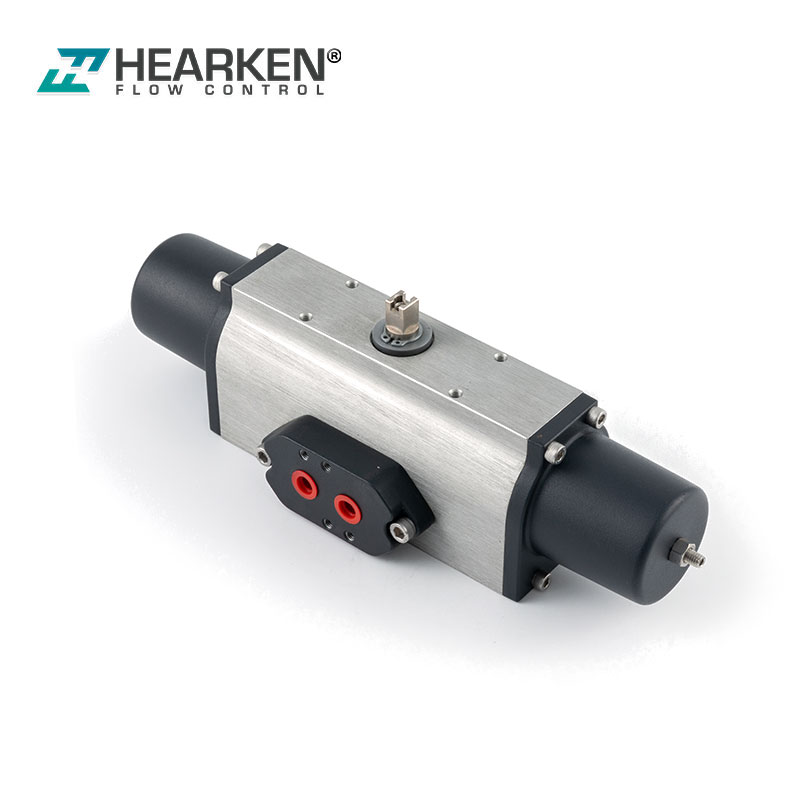


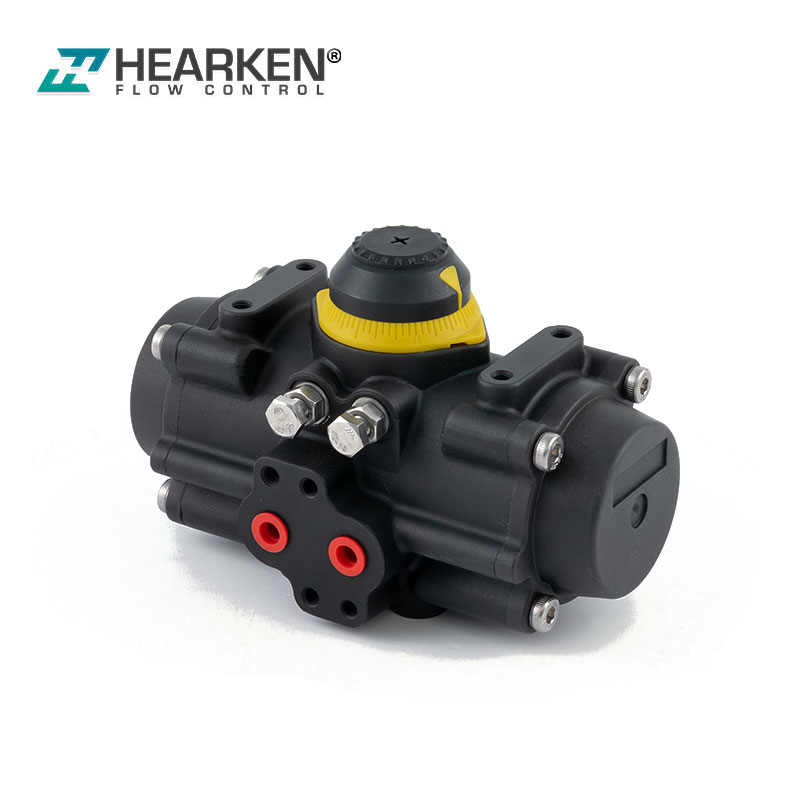
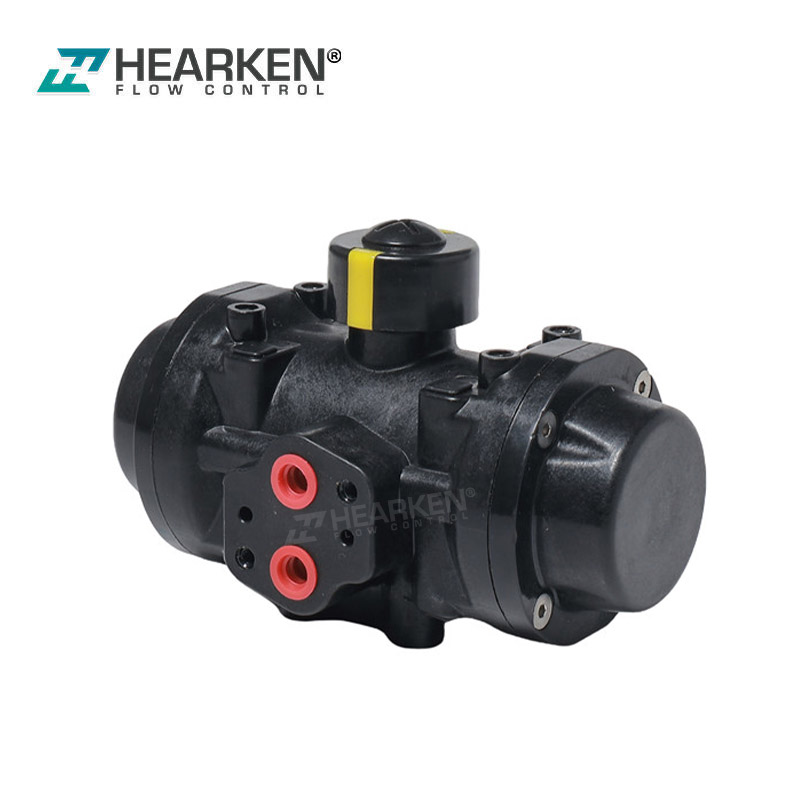
HPAC compact scotch yoke pneumatic actuator is a piston-type actuator, which is suitable for switching off or metering control of valves with a 90° rotation angle (such as ball valves, butterfly valves, and plug valves).
HPAC Scotch yoke Pneumatic actuator is prelubricated and tested to a min one million. Actuators are avvaliable double acting and spring-return models. It meets international ISO5211 standards for easy valve mounting and replacement. A visual position indicator will monitor the open and closed position.

| S/N | Desription | Material | S/N | Desription | Material |
| 1 | Cylinder | Aluminium Alloy | 18 | Piston ring | Engineering Plastics |
| 2 | Piston | Aluminium Alloy | 19 | Piston O-ring | NBR |
| 3 | Shaft | Alloy Steel | 20 | Piston support chip | Engineering Plastics |
| 4 | Yoke | Alloy Steel | 21 | Connection plate O-ring | NBR |
| 5 | Piston pin | Alloy Steel | 22 | Connection plate | Aluminium Alloy |
| 6 | Yoke pin | Alloy Steel | 23 | Plate socket screw | Stainless Steel |
| 7 | Bearing | Alloy Steel | 24 | Cover socket screw | Stainless Steel |
| 8 | Upper circlip | Stainless Steel | 25 | Nut O-ring | NBR |
| 9 | Lower circlip | Stainless Steel | 26 | Screws | Stainless Steel |
| 10 | Upper washer | Engineering Plastics | 27 | End Cover Seal Ring | NBR |
| 11 | Lower washer | Engineering Plastics | |||
| 12 | Upper shaft O-ring | NBR | 101 | Cover | Aluminium Alloy |
| 13 | Lower shaft O-ring | NBR | 102 | Spring | Spring Steels |
| 14 | Upper shaft bearing | POM/Graphite Copper Bushing | 103 | Lower Spring Washer | Aluminium Alloy |
| 15 | Lower shaft bearing | POM/Graphite Copper Bushing | 104 | Spring Shaft | Stainless Steel |
| 16 | Upper piston bearing | Engineering Plastics | 201 | Double Acting End Cover | Aluminium Alloy |
| 17 | Lower piston bearing | Engineering Plastics | 202 | Set Screw | Stainless Steel |
The Hearken Flow HPAC Series compact Scotch Yoke pneumatic actuators are specifically designed to match the dynamic torque demand curves of quarter-turn ball valves and butterfly valves. The HPAC series actuator provides precise peak torque at the valve’s off-seat (0°) and reset (90°) positions that achieves optimal power density without unnecessarily oversize the actuator to meet mid-stroke torque requirements. These mechanical advantages provide an exceptional overall return on investment: greatly reduced valve package dimensions, lower pipeline overhang stress, reduced international freight and packaging savings, lower air consumption, and field-proven durability reaching 2,000,000 to 3,000,000 cycles (with Hearken Flow guaranteed minimum cycle life of 1 million cycles).
|
Feature & Technical Spec |
Engineering & Buyer Advantage (For OEMs & Distributors) |
|
|
Scotch Yoke Dynamic Torque Output (0° and 90° Peak Force) Hearken Flow HPAC series compact Scotch Yoke pneumatic actuators use a variable lever arm geometry design that focuses on maximum torque at the 0° (open/disengage) and 90° (reset/close) positions in both double-acting (15 to 13,619 Nm) and spring-return (10 to 9,155 Nm). |
The actuator's design precisely matches the dynamic resistance characteristics of quarter-turn ball valves and butterfly valves during the opening and closing (i.e., when the valve seat makes contact with or breaks away from the valve). According to the mechanical output at the 0° and 90° stroke endpoints, that avoid unnecessary torque loss in the middle of the stroke to achieve a smaller, lighter actuator design, which not only minimizes pipeline overhang stress but also reduces the volume of the shipping packaging. |
|
|
Hardened Alloy Steel Rolling Friction Mechanism (>50 HRC) Our HPAC actuator uses a high-strength alloy steel yoke and bearing steel rollers, both heat-treated and hardened to achieve a hardness exceeding 50 HRC. It converts traditional sliding friction into smooth rolling contact. HPAC actuator is pre-lubricated and tested prior to shipment to ensure a service life of at least 1 million cycles. |
HPAC actuator can greatly reduce internal dynamic friction and dynamic wear under heavy switching applications. According to practical application verification, it can reach 1,000,000 to 3,000,000 cycles in high-cycle applications (such as PSA nitrogen generation and rapid ESD systems), provided you have almost zero after-sales warranty claims. |
|
|
Hard-Anodized Aluminum Cylinder Housing (Anodized Layer Thickness >20 μm) Hearken Flow HPAC compact scotch yoke pneumatic actuator uses an extruded aluminum alloy cylinder, with both inner and outer surfaces treated with a hard-anodized coating (anodized layer thickness >20 μm). It is equipped with die-cast aluminum end caps and standard stainless steel SS304 fasteners (A2/A4). |
The hard-anodized internal bore provides a low-friction, high-hardness surface that helps avoid scoring on the cylinder wall and extends seal lifespan. The high-strength aluminum alloy housing greatly reduces the weight of the actuator, so it is easier to install on the pipeline and reduces international shipping freight. |
|
|
Multi-Point Polymer Guidance and Replaceable Shaft Seal We use ultra-high-molecular-weight polymer piston guide rings with POM/graphite-copper dual shaft bushings. It includes an independent shaft seal structure that can be replaced without disassembling the drive shaft. |
It keeps precise piston alignment, avoids direct metal-to-metal contact, and prevents piston tilt, thereby maximizing the service life of the dynamic O-rings. You can quickly replace the shaft seals without disassembling the entire actuator, which cuts down plant downtime. |
|
|
Standardized mounting interfaces (ISO 5211, DIN 3337, and NAMUR) HPAC series actuator's bottom mounting flange conforms to ISO 5211 / DIN 3337 standards (sizes ranging from F03 to F25) and uses a star-shaped bore output shaft design. The top pinion slot and air supply connection follow VDI/VDE 3845 (NAMUR) and UNI EN 15714-3:2022 standards. |
You can mount directly on standard quarter-turn ball valves and butterfly valves without brackets or custom couplings, which reduces installation time by up to 50%. Our HPAC series compact scotch yoke pneumatic actuator can easily integrate with standard NAMUR solenoid valves, limit switch boxes, and electric/pneumatic (E/P) positioners from all major global automation brands. |
|
|
Modular Low-Stress Spring (K11 to K33) The spring is manufactured from high-grade alloy spring steel and is designed for low operating stresses. We offer a variety of modular springs (K11, K12, K22, K13, K23, K33), suitable for air supply pressures ranging from 3.0 to 8.0 bar, and support both “air-off close” (FC) and “air-off open” (FO) modes. |
The low-stress design ensures that spring fatigue failure will not occur over millions of consecutive operating cycles. You do not need to stock many HPAC actuator models; you can simply replace the modular spring to meet varying air supply pressure requirements (3.0–8.0 bar), thereby optimizing inventory capital tied up. |
|
|
Integrated Manual Override (Optional) A compact, side-mounted handwheel that is directly integrated into the cylinder housing. Suitable for both double-acting (DA) and single-acting (SA) models (from HPAC070HW to HPAC260HW). |
This design reduces the bulky and heavy sandwich-type declutchable gearbox, saving over 50% of the vertical installation space above the valve, preventing the valve stem from being subjected to dangerous lateral bending stresses, and ensuring reliable emergency manual operation during air loss. |
|
|
Double Directional Travel Limits and Wide Temperature Range HPAC series actuators use dual external stainless steel travel adjustment screws with locking nuts. The closing travel adjustment range for the double-acting (DA) type is -3° to +8°; for the single-acting (SA) type, the adjustment range is 82° to 93° (opening travel for the FC normally closed type) or -3° to +8° (closing travel for the FO normally open type). Available in standard (-20°C to +80°C), low-temperature (-50°C to +60°C), and high-temperature (-15°C to +150°C). |
External travel adjustment allows you to calibrate the fully open and fully closed end positions, ensuring precise valve shutoff and preventing damage to the seal seat caused by overpressure. We can provide you with reliable, customized solutions tailored to various project conditions, such as extremely cold polar pipelines or high-temperature industrial processes. |
| Model | HPAC40 | HPAC60 | HPAC70 | HPAC80 | HPAC100 | HPAC125 | |||||
| Acting Type | Double | Double | Single | Double | Single | Double | Single | Double | Single | Double | Single |
| Weight (Kg) | 1 | 1.5 | 2.1 | 2.7 | 4.1 | 3.8 | 5.9 | 6.1 | 12.3 | 12.05 | 20.8 |
| Air Comsuption (NL/Cycle) |
0.19 | 0.47 | 0.28 | 0.93 | 0.6 | 1.5 | 0.95 | 2.47 | 1.97 | 5.83 | 3.41 |
| Closing Time (Sec.) |
<0.25 | <0.25 | <0.3 | <0.35 | <0.4 | <0.45 | <0.55 | <0.55 | <0.7 | <1 | <0.90 |
| Model | HPAC140 | HPAC160 | HPAC180 | HPAC220 | HPAC260 | |||||
| Acting Type | Double | Single | Double | Single | Double | Single | Double | Single | Double | Single |
| Weight (Kg) | 20.05 | 32.1 | 27.7 | 47.6 | 37.45 | 60.1 | 65.5 | 108.7 | 65.5 | 211.9 |
| Air Comsuption (NL/Cycle)@6bar |
21.5 | 4.51 | 28.87 | 6.49 | 16.58 | 10.22 | 29.8 | 17.6 | 62.1 | 36.4 |
| Closing Time @6bar(Sec.) |
<1.5 | <1.5 | <2 | <1.5 | <2 | <1.5 | <2 | 2.5 | <2.5 | <3 |
Hearken Flow HPAC series compact scotch yoke pneumatic actuators use permanent cleanroom lubrication and hardened alloy rolling internal components to provide millions of maintenance-free operating cycles. However, harsh field conditions—such as compressor air supply pressure fluctuations, contaminants in the air system, or increased valve seat torque caused by media buildup—may sometimes affect automation performance.
To reduce plant downtime and ensure smooth operation, we have written this comprehensive diagnostic and maintenance guide to keep your quarter-turn automated valves operating with precision and reliability.
|
Problem |
Possible Cause |
How do we solve it? |
|
The actuator does not rotate or stops operating after the air supply is connected. |
Low upstream air supply pressure below the minimum operating range (required: 3.0–8.0 bar); blocked, damaged, or frozen compressed air lines; loss of power to the solenoid valve coil or a missing PLC control signal; excessive valve breakaway torque exceeds the actuator output torque. |
We suggest using a pressure gauge to measure the dynamic air pressure at the actuator inlet to confirm the design pressure (5.5 bar). We also suggest manually testing the solenoid valve’s manual override button, cleaning the air supply line to remove dirt or moisture, and turning the valve stem with a manual wrench to confirm the valve moves freely without mechanical sticking. If the valve operating torque increases due to process scaling, we can assist you in re-checking the torque value. |
|
Valve does not fully seal (seat leakage), or the actuator travel exceeds 0°/90° |
Incorrect setting of the external travel stop adjustment bolts; misalignment between the drive coupling and valve stem square; installation direction does not match the fail position logic; foreign debris is trapped in the valve. |
Our HPAC series compact scotch yoke has dual external travel stop bolts with sealing lock nuts. We advise depressurizing the actuator before adjusting the travel stops: For Double Acting (DA) Models, adjust the closing travel within -3° to +8°. For Single Acting FC Models, adjust the opening travel within 82° to 93° (or for FO models, adjust the closing travel within -3° to +8°). We suggest adjusting both travel stop bolts evenly until the pistons reach the end position at the same time. Then tighten the O-ring seals and lock nuts. |
|
Actuator rotates in the opposite direction of the intended valve travel |
The air supply lines connected to Port A and Port B are reversed; the actuator installation direction is offset by 90°; or the control logic incorrectly selected the single-acting spring mode (fail close or fail open). |
For Double-Acting (DA) models, we suggest swapping the air supply lines connected to Port A and Port B on the NAMUR interface plate. For Single-Acting (SA) models, we suggest confirming whether the valve requires fail-close (FC, air to open) or fail-open (FO, air to close) operation. If the wrong fail-safe mode is selected, our modular design allows the internal yoke part direction to be adjusted or the spring set to be changed |
|
Operating speed is slow, jerky, or travel response is delayed |
The inner diameter of the pneumatic tubing is too small, restricting flow (SCFM); the exhaust silencer or vent components are blocked by dust or oil; the upstream air filter-regulator-lubricator (F.R.L.) is partially blocked; or valve packing friction increases due to media crystallization. |
We suggest selecting an appropriate pneumatic tubing size (minimum diameter of 8 mm for models HPAC040–180; minimum diameter of 12 mm for models HPAC220–260). We suggest cleaning or replacing the sintered silencer on ports A and B, checking the flow rating of the air treatment, and adjusting the speed-controlled flow restrictor to achieve the required cycle time (0.1 to 1.6 seconds for compact models). |
|
External compressed air leaks detected at ports, shafts, or end caps |
Loose or missing stroke stop seal nuts or O-rings; loose NAMUR interface mounting screws or fittings; wear on the output shaft dynamic seal, end cap gasket, or piston O-ring. |
We suggest retightening travel stop locking nuts and checking O-ring integrity. For output shaft seals, our HPAC actuators use replaceable shaft seal construction—we can replace the upper and lower shaft O-rings directly without removing the drive shaft or taking the valve out of the pipeline. If internal cylinder seals require repair, we can provide seal repair kits. |
|
Single-acting spring fails to return valve to safe position upon air failure |
The spring chamber exhaust port (Port A) is blocked, causing air pressure to build up in the spring chamber; the pipeline pressure difference or valve seat torque is higher than the spring end torque rating; the internal springs are worn from exceeding the rated number of operating cycles. |
We suggest removing and inspecting the vent silencer on Port A to make sure that air can freely leave the spring chamber. We also suggest isolating the valve to check whether pipeline pressure or seat pressure differential is causing an increase in the required breakaway torque. If the air supply pressure has changed, we suggest reconfiguring our modular spring combinations (K11 through K33) to restore optimal spring return force. |
|
Visual position indicator is not aligned, or the remote switch box feedback signal is lost |
The visual indicator dome has come out of the NAMUR drive slot; the switch box mounting bracket fasteners are loose; the internal limit switch cam has moved; feedback wiring terminals are loose or corroded. |
We suggest pressing and locking the visual indicator directly into the NAMUR drive pinion slot. For auxiliary limit switch boxes or smart positioners, we suggest tightening all VDI/VDE 3845 bracket bolts to remove any mechanical space. Then cycle the valve to the verified 0° and 90° positions and recalibrate the internal limit switch cam until the open/close signals are confirmed on the PLC/DCS. |
|
Strong mechanical impact, shaking, or vibration at the end of travel |
Operating air supply pressure is too high, and no speed control is used; the travel stop bolts are not balanced properly (only one piston contacts the stop bolt); the actuator output bore and valve stem are not mechanically aligned. |
We suggest adjusting the dynamic air supply pressure to the design standard pressure (5.5 bar) and installing metering exhaust flow restrictors. We suggest balancing both travel stop bolts evenly so that both internal pistons contact the stop bolts at the same time. We also suggest loosening the ISO 5211 flange bolts, realigning the actuator with the center of the valve mounting flange, and retightening the bolts evenly in a diagonal cross pattern. |
|
Integrated manual handwheel (HW Series) is difficult to turn or jammed |
Residual air pressure remains inside the actuator; the travel stop bolts are over-tightened and pressing against the pistons; or the manual override handwheel has reached its mechanical travel stop. |
We suggest the air pressure in ports A and B is isolated and fully released before turning the handwheel. We also suggest checking whether the external travel limit bolt is mechanically locked against the piston and avoiding the use of extension bars or pipes on the handwheel rim to protect the drive gears. |
Maintenance-Free Actuator Housing (Permanent Factory Lubrication)
No Scheduled Greasing Required: The internal cylinder, alloy yoke, rolling elements, and guide bearings are all permanently lubricated with high-performance synthetic grease during assembly. Under rated air quality (ISO 8573-1:2010 filtration precision of 40 μm or finer) and specified operating pressure (3.0 to 8.0 bar), the actuator housing requires no periodic relubrication or internal disassembly throughout its service life.
Routine Maintenance Scope: Routine maintenance at the plant is limited to external visual inspections, torque checks on fasteners, and maintenance of upstream air filtration components (solenoid valves, F.R.L. units, and positioners).
Periodic Inspection Checklist (During Routine Plant Overhaul)
Fasteners and Mounting Check: Check the ISO 5211 bottom mounting bolts, accessory bracket fasteners, and travel stop lock nuts for looseness caused by pipeline vibration. Retighten the bolts in a diagonal cross pattern according to the standard fastener torque table.
Pneumatic Leak Check: During pressure cycling, spray a neutral leak detection solution on all air line fittings, Port A/Port B NAMUR plates, external travel stop lock nuts, and upper/lower drive shaft seals to check for leaks.
Operating Travel and Cycle Time: Perform at least three complete open/close test cycles under controlled conditions. Check that the travel movement is smooth and free of stick-slip or shaking. Check that the cycle time meets the factory specifications (0.1 to 1.6 seconds for compact models), and verify that the end-of-travel cushioning is balanced.
Visual and Control Signal Calibration: Verify the high-visibility dome indicator on top matches the actual position of the valve disc or ball, and confirm that the remote on/off feedback signals in the DCS/PLC control room fully match the mechanical limit switches.
Breather and Silencer Inspection: Check the breather silencer installed on Port A of the HPAC single-acting pneumatic actuator. Clean blocked sintered bronze or stainless steel silencers with a degreasing solvent, or replace dirty filter elements to prevent back pressure in the spring chamber.
Seal Replacement Procedure (Without Dismounting the Valve)
Our HPAC Series uses the replaceable shaft seal design that makes maintenance easier and helps you avoid costly production line downtime:
Isolate the pneumatic and electrical supplies, release all internal air pressure, and lock out and tag the air supply lines.
Remove the top visual indicator and retaining ring.
Remove the worn upper and lower shaft O-rings and washers without pulling out the central drive shaft or removing the actuator from the valve.
Apply silicone grease to the NBR or FKM O-rings supplied by Hearken Flow, press them into the specified sealing grooves, reinstall the retaining rings, and perform a pneumatic leak test before putting the actuator back into service.
Long-Term Storage and Warehousing Guidelines
Environmental Conditions: Store the HPAC series compact scotch yoke pneumatic actuator in a dry, clean, and well-ventilated indoor warehouse at temperatures between -20°C and +40°C, away from direct sunlight, rain, and corrosive gases. Keep all pneumatic ports (G1/4 or G1/2) and electrical entries sealed with the plastic plugs.
Storage Over 12 Months: Visually inspect the external elastomer seals and perform a low-pressure pneumatic functional test (3 complete cycles) every 6 months to avoid the seals from sticking and keep the lubricant properly distributed.
Storage Over 3 Years: All dynamic rubber O-rings and guide rings must be carefully inspected and replaced with genuine Hearken Flow seal repair kits before installing the actuator


The HPAC double-acting Scotch yoke pneumatic actuators use compressed air to power both the opening and closing strokes.

DA Open (Counterclockwise Rotation): When air pressure is supplied to Port A, the pistons move inward, and the output shaft rotates counterclockwise to open the valve. Air comes out through Port B.
DA Close (Clockwise Rotation): When air pressure is supplied to Port B, the pistons move outward, and the output shaft rotates clockwise to close the valve. Air comes out through Port A.
Loss of Air (Fail State): Fail-in-Place (Stay-Put). There are no reset return springs inside the actuator. The valve will stay in its current position unless an external pneumatic circuit or a pneumatic lock valve is used to change the position.
The torques shown in the diagram are measured values. The required size of the actuator can be established by comparing the values of the actuator with the required torque of the valve. The suggested safety factor for double-acting actuators under normal working conditions is 20%-50%.
| Air Supply | 3bar | 4bar | 5bar | 5.6bar | 6bar | 7bar | 8bar | ||||||||||||||
| Size | α=0° | α=45° | α=90° | α=0° | α=45° | α=90° | α=0° | α=45° | α=90° | α=0° | α=45° | α=90° | α=0° | α=45° | α=90° | α=0° | α=45° | α=90° | α=0° | α=45° | α=90° |
| HPAC040DA | 16 | 7 | 12 | 22 | 9 | 17 | 27 | 12 | 21 | 31 | 13 | 23 | 33 | 14 | 25 | 38 | 16 | 29 | 44 | 19 | 33 |
| HPAC070DA | 90 | 39 | 68 | 120 | 52 | 91 | 150 | 65 | 113 | 168 | 72 | 127 | 180 | 78 | 136 | 210 | 90 | 159 | 240 | 103 | 181 |
| HPAC080DA | 145 | 63 | 110 | 194 | 83 | 146 | 242 | 104 | 183 | 271 | 117 | 205 | 290 | 125 | 220 | 339 | 146 | 256 | 387 | 167 | 293 |
| HPAC090DA | 216 | 93 | 164 | 288 | 124 | 218 | 361 | 155 | 273 | 404 | 174 | 305 | 433 | 186 | 327 | 505 | 218 | 382 | 577 | 249 | 436 |
| HPAC100DA | 318 | 137 | 241 | 424 | 183 | 321 | 530 | 228 | 401 | 594 | 256 | 449 | 636 | 274 | 481 | 742 | 320 | 561 | 849 | 366 | 641 |
| HPAC125DA | 544 | 235 | 412 | 726 | 313 | 549 | 907 | 391 | 686 | 1016 | 438 | 768 | 1089 | 469 | 823 | 1270 | 547 | 960 | 1452 | 626 | 1098 |
| HPAC140DA | 771 | 332 | 583 | 1028 | 443 | 777 | 1285 | 553 | 971 | 1439 | 620 | 1088 | 1541 | 664 | 1165 | 1798 | 775 | 1359 | 2055 | 886 | 1554 |
| HPAC160DA | 1166 | 502 | 881 | 1554 | 670 | 1175 | 1943 | 837 | 1469 | 2176 | 937 | 1645 | 2331 | 1004 | 1762 | 2720 | 1172 | 2056 | 3108 | 1339 | 2350 |
| HPAC180DA | 1626 | 700 | 1229 | 2168 | 934 | 1639 | 2710 | 1167 | 2048 | 3035 | 1308 | 2294 | 3252 | 1401 | 2458 | 3793 | 1634 | 2868 | 4335 | 1868 | 3277 |
| HPAC220DA | 3013 | 1298 | 2278 | 4018 | 1731 | 3037 | 5022 | 2164 | 3796 | 5625 | 2423 | 4252 | 6027 | 2597 | 4556 | 7031 | 3029 | 5315 | 8035 | 3462 | 6074 |
| HPAC260DA | 6192 | 2668 | 4681 | 8256 | 3557 | 6241 | 10321 | 4447 | 7802 | 11559 | 4980 | 8738 | 12385 | 5336 | 9362 | 14449 | 6225 | 10922 | 16513 | 7114 | 12483 |
The HPAC single-acting scotch yoke actuator uses compressed air to drive in one direction, which compresses the internal modular spring. When the air supply pressure fails, the mechanical spring energy automatically drives the actuator to a preset safe position.

Air Supply (Valve Opening): When air pressure is supplied to Port B, the pistons move outward and compress the internal springs. The output shaft rotates counterclockwise to open the valve. Air from the spring chamber comes out through Port A.
Loss of Air (Valve Closing): When air pressure is lost or exhausted, the compressed springs push the pistons inward. The output shaft rotates clockwise to close the valve.

Air Supply (Valve Closing): When air pressure is supplied to Port B, the pistons move outward and compress the internal springs. The output shaft rotates clockwise to close the valve. Air from the spring chamber comes out through Port A.
Loss of Air (Spring Opens): When air pressure is lost or exhausted, the compressed springs push the pistons inward. The output shaft rotates counterclockwise to open the valve.

| Dimension & Series No. HPAC040DA | Dimension & Series No. HPAC060DA |
 |
 |
| Dimension & Series No. HPAC060DA | Dimension & Series No. HPAC080DA |
 |
 |
| Dimension & Series No. HPAC100DA | Dimension & Series No. HPAC125DA |
 |
 |
| Dimension & Series No. HPAC140DA | Dimension & Series No. HPAC160DA |
 |
 |
| Dimension & Series No. HPAC180DA | Dimension & Series No. HPAC220DA |
 |
 |
| Dimension & Series No. HPAC260DA | Dimension & Series No. HPAC060SR |
 |
 |
| Dimension & Series No. HPAC070SR | Dimension & Series No. HPAC080SR |
 |
 |
| Dimension & Series No. HPAC100SR | Dimension & Series No. HPAC125SR |
 |
 |
| Dimension & Series No. HPAC140SR | Dimension & Series No. HPAC160SR |
 |
 |
| Dimension & Series No. HPAC180SR | Dimension & Series No. HPAC220SR |
 |
 |
| Dimension & Series No. HPAC260SR | |
 |
Selecting the right HPAC series actuator size requires balancing process safety, available compressed air supply, mechanical mounting standards, and the specific dynamic torque requirements of quarter-turn equipment. Hearken Flow follows this general sizing approach to ensure reliable valve seat sealing, avoid sticking throughout the full stroke, and optimize the overall package size.
Double-Acting (HPAC-DA):
Powered by compressed air for both opening and closing.
If the air or power supply fails, the actuator stays in its last position (fail-in-place / stays in position).
Recommended for: Continuous modulation or throttling control (with an electro-pneumatic positioner), flow balancing, and non-critical process or utility lines.
Single-Acting Spring Return (HPAC-SR):
Powered by compressed air in one direction to compress the internal modular spring assembly.
The spring energy automatically returns the quarter-turn valve or device to the preset safe position when the air supply fails:
Fail-Close (FC / Air-to-Open): Air supply opens the valve. The mechanical springs automatically close the valve when the air supply is lost. Recommended for emergency shutdown and flammable line isolation.
Fail-Open (FO / Air-to-Close): Air supply closes the valve. The mechanical springs automatically open the valve when the air supply is lost. Recommended for emergency venting, exhaust valves, and thermal relief.
We always calculate the required target torque by applying the appropriate safety factors for the process media and operating environment to the rated torque provided by the valve or equipment manufacturer.
Clean fluids and air (water, lubricating oil, clean gas, light-duty dampers): Multiply the rated torque by 1.20 to 1.25 (20% to 25% safety margin).
Dry gas, steam, and non-lubricating media: Multiply the rated torque by 1.30 to 1.35 (30% to 35% safety margin).
Slurries, viscous media, particles, and heavy-duty industrial dampers: Multiply the rated torque by 1.40 to 1.50 (40% to 50% safety margin).
Ball Valve Standard (Hearken Flow Sizing Rule): Due to the high seat breakaway friction inherent to ball valve designs, always apply a minimum +50% safety margin (Multiplier: 1.50) for all ball valves, regardless of the media type.
Next, match the safety-adjusted torque with the HPAC dynamic output torque table based on the quarter-turn resistance curve:
Suitable for valves where resistance peaks at the seat position (0°) and End of Stroke (90°) due to seat interference and pipeline pressure differences.
Butterfly Valves
Double-Acting (DA):
Check the air supply torque at 0° (BTO – Break to Open) is ≥ the target safety torque.
Single-Acting Fail-Close (SR-FC):
Check the spring output torque at 0° (ETC – End to Close) is ≥ the target safety torque.
Check the air supply torque at 0° (BTO – Break to Open) is ≥ the target safety torque.
Single-Acting Fail-Open (SA-FO):
Check the air supply torque at 90° (ETC – End to Close) is ≥ the target safety torque.
Check the spring output torque at 90° (BTO – Break to Open) is ≥ the target safety torque.
Ball Valves & Segmented Ball Valves (Minimum +50% Safety Factor Applied)
Double-Acting (DA):
Check the air supply torque at 90° (BTC – Break to Close) is ≥ the target safety torque.
Single-Acting Fail-Close (SR-FC):
Check the spring output torque at 0° (ETC – End to Close) is ≥ the target safety torque.
Check the air supply torque at 0° (BTO – Break to Open) is ≥ the target safety torque.
Check the air supply torque at 90° (ETO – End to Open) is ≥ 70% of the target safety torque.
Single-Acting Fail-Open (SR-FO):
Check the spring output torque at 90° (BTO – Break to Open) is ≥ the target safety torque.
Check the air supply torque at 90° (ETC – End to Close) is ≥ the target safety torque.
Check the spring output torque at 0° (ETO – End to Open) is ≥ 70% of the target safety torque.
Suitable for quarter-turn equipment where mechanical friction, packing resistance, or airflow resistance is present throughout the full 90° stroke. In addition to the 0° and 90° end positions, verify the 45° mid-stroke running torque. The 45° running torque must be ≥ 75% of the equipment's target safety torque to prevent stalling during mid-travel.
Plug Valves & Heavy Dampers
Double-Acting (DA):
Check the air supply torque at 0° (BTO) and 90° (BTC) is ≥ the target safety torque.
Check the air supply torque at 45° (RTO / RTC – Running Torque) is ≥ 75% of the target safety torque.
Single-Acting Fail-Close (SR-FC / Air to Open, Spring to Close):
Pneumatic Stroke (Opening): Check the air supply torque at 90° (ETO – End to Open) is ≥ the target safety torque, AND the air supply torque at 45° (RTO – Running Torque to Open) is ≥ 75% of the target safety torque.
Spring Stroke (Closing): Check the spring output torque at 0° (ETC – End to Close) is ≥ the target safety torque, AND the spring output torque at 45° (RTC – Running Torque to Close) is ≥ 75% of the target safety torque.
Single-Acting Fail-Open (SR-FO / Air to Close, Spring to Open):
Pneumatic Stroke (Closing): Check the air supply torque at 90° (ETC – End to Close) is ≥ the target safety torque, AND the air supply torque at 45° (RTC – Running Torque to Close) is ≥ 75% of the target safety torque.
Spring Stroke (Opening): Check the spring output torque at 0° (ETO – End to Open) is ≥ the target safety torque, AND the spring output torque at 45° (RTO – Spring Running Torque to Open) is ≥ 75% of the target safety torque.
|
Equipment Type & Service Condition |
Action Mode Selection & Critical Torque Verification |
|
Class 150 Floating Ball Valve Media: Saturated Steam (6 bar) Rated Torque: 120 Nm Safety: +50% (x1.50) Target: 180 Nm (70% Target: 126 Nm) |
[DA] Selected Model: HPAC080DA • Air supply 90° (BTC): 188 Nm ≥ 180 Nm [SA-FC] Selected Model: HPAC125SR-K22-FC (Spring 22) • Spring 0° (ETC): 257 Nm ≥ 180 Nm • Air supply 0° (BTO):506 Nm ≥ 180 Nm • Air supply 90° (ETO): 324 Nm ≥ 126 Nm [SA-FO] Selected Model: HPAC100SR-K22-FO (Spring 22) • Spring 90° (BTO): 202 Nm ≥ 180 Nm • Air supply 90° (ETC): 187 Nm ≥ 180 Nm • Spring 0° (ETO): 152 Nm ≥ 126 Nm |
|
PN16 Resilient-Seated Butterfly Valve Media: Industrial Water (10 bar) Rated Torque: 220 Nm Safety: +25% (x1.25) Target: 275 Nm |
[DA] Selected Model: HPAC090DA • Air supply 0° (BTO): 343 Nm ≥ 275 Nm [SA-FC] Selected Model: HPAC125SR-K13-FC (Spring 13) • Spring 0° (ETC): 286 Nm ≥ 275 Nm • Air supply 0° (BTO): 480 Nm ≥ 275 Nm [SA-FO] Selected Model: HPAC125SR-K22-FO (Spring 22) • Air supply 90° (ETC): 324 Nm ≥ 275 Nm • Spring 90° (BTO): 341 Nm ≥ 275 Nm |
|
Metal-Seated Lubricated Plug Valve Media: Viscous Slurry with Solids Rated Torque: 180 Nm Safety: +40% (x1.40) Target: 252 Nm (75% Mid-Run Target: 189 Nm) |
[DA] Selected Model: HPAC100DA • Air supply 0° (BTO) & 90° (BTC) ≥ 252 Nm (Both PASS) • Air supply 45° (Run): 257 Nm ≥ 189 Nm [SA-FC] Selected Model: HPAC125SR-K13-FC (Spring 13) • Spring 0° (ETC) & Air 90° (ETO) ≥ 252 Nm (Both PASS) • 45° Mid-Run (Air supply/Spring): 238 Nm / 199 Nm ≥ 189 Nm [SA-FO] Selected Model: HPAC-125-SA-FO (Spring 13) • Air 90° (ETC) & Spring 0° (ETO) ≥ 252 Nm (Both PASS) • 45° Mid-Run (Air supply/Spring): 238 Nm / 199 Nm ≥ 189 Nm |
Valve Mounting Flanges (ISO Direct Mount and Custom Brackets): The bottom mounting pad meets ISO 5211 / DIN 3337 standards, with sizes from F03 to F25; our HPAC actuator can be mounted directly on valves and dampers without custom brackets. For non-standard or older valves without an ISO mounting pad, or for high-temperature applications that require thermal insulation, custom mounting brackets and machined drive couplings (adapters) can be used for easy actuator installation.
Drive Shaft Connection: Confirm the valve stem uses a double-square drive (9 × 9 mm to 46 × 46 mm) or a keyed round drive. Our HPAC double-square output shaft supports both parallel (0°) and diagonal (45°) valve stem positions and can easily connect to custom-machined valve stem couplings.
Top Automation Interface: The top shaft and accessory mounting dimensions fully comply with VDI/VDE 3845 (NAMUR) standards, enabling quick, direct installation of limit switch boxes, pneumatic positioners, and visual dome indicators.
Standard (ST): -20°C to +80°C (Standard NBR seals, synthetic grease) — General industrial plants, water treatment, HVAC, utility pipelines.
Low-Temp (LT): -50°C to +60°C (Low-temp silicone rubber seals, Arctic grease) — Sub-zero climates, Arctic oil & gas pipelines, cryogenic refrigeration plants.
High-Temp (HT): -15°C to +150°C (FKM fluororubber seals, high-temp grease) — Steam headers, thermal power plants, furnace exhaust lines, high-temperature flue dampers.
Manual Override Selection:
Standard: Direct drive without manual override.
HW Series (Integrated Side Handwheel): Select HPAC-HW when overhead vertical clearance is constrained, pipeline/damper weight must be minimized, or valve stem side-loading must be eliminated.
[Series] - [Size] - [Action Mode] - [Spring Set] - [Manual Override] - [Temp Build]
1. Series: HPAC (Compact Scotch Yoke Pneumatic Actuator)
2. Cylinder Size: 040 | 055 | 070 | 090 | 115 | 140 | 165 | 180 | 205 | 220 | 260
3. Action Mode: DA (Double Acting) | SR-FC (Single Acting Fail-Close) | SR-FO (Single Acting Fail-Open)
4. Manual Override: Blank (Standard drive) | HW (Integrated inline side handwheel)
5. Temperature: Blank (Standard -20°C to +80°C) | LT (Low-Temp -50°C to +60°C) | HT (High-Temp -15°C to +150°C)
Ordering Example: HPAC090SR-FC-K22-HW-LT specifies an HPAC Size 090 Single-Acting actuator, Fail-Close mode, balanced K22 spring set for 5.0 bar air supply, integrated side handwheel, and low-temperature (-50°C).
Q1: If Scotch Yoke actuators cost more than standard Rack and Pinion actuators, why should I choose Scotch Yoke?
A: It is true that Scotch Yoke actuators have a higher unit cost because they require more complex machining and use hardened alloy steel components. However, our HPAC compact Scotch Yoke pneumatic actuator's real advantage is the total cost of ownership (TCO).
The torque characteristics of a Scotch Yoke mechanism closely match the “U-shaped” torque curve of quarter-turn valves. This means a smaller HPAC actuator can often provide the same valve seat sealing force.
The more compact HPAC actuator size can reduce overhung load on the valve and piping, lower shipping weight, and reduce unnecessary side loads during the stroke. This can also help extend valve service life.
Q2: As a distributor, my customers have different air supply pressures, such as 4.0, 5.0, and 6.0 bar, and may require both Double-Acting (DA) and Single-Acting (SR) modes. How does the HPAC Series help me optimize my inventory?
A: The HPAC Series uses a common actuator housing design that can greatly reduce the number of SKUs you need to manage for different pressure requirements or operating modes.
Single-Acting (SR) (DA-to-SR Conversion): You only need to stock standard Double-Acting (DA) actuators. If you require a Single-Acting (SR) fail-safe actuator for a specific air supply pressure, you do not need to stock a separate SR actuator. You can simply remove the DA end caps, install the modular spring set (K11 to K33) matched to the site pressure, and install the extended SR end caps.
Double-Acting (DA): A single HPAC DA actuator can adapt to different air supply pressures. During sizing, you only need to calculate based on the minimum guaranteed pressure, such as 4.0 bar, to ensure reliable valve sealing. You also need to confirm that the peak output torque at the maximum pressure, such as 6.0 bar, does not exceed the valve's Maximum Allowable Stem Torque (MAST).
This modular solution lets you handle a wide range of operating conditions while reducing inventory capital tied up in stock.
Q3: Does the HPAC actuator require lubricated instrument air?
A: No. The HPAC Series is pre-lubricated with high-performance synthetic grease and is designed to operate smoothly with clean, dry, oil-free instrument air that meets ISO 8573-1 Class 3 or higher.
There is no need to install a line lubricator. In fact, we do not suggest using one, because unapproved lubricants may gradually wash out the pre-applied permanent grease over time.
Q4: Can the HPAC actuator be installed vertically or upside-down on the pipeline?
A: Yes. The HPAC Series uses a multi-point polymer guide system and a robust rolling-friction mechanism to keep the pistons and scotch yoke properly aligned, regardless of the installation angle.
The HPAC actuator can be installed horizontally, vertically, or upside down without causing a loss of output torque, increased wear, or piston tilting.
Q5: What is the expected cycle life and maintenance requirement for the HPAC series?
A: The HPAC Series uses a hardened alloy steel rolling-friction mechanism (hardness >50 HRC) and ultra-high-molecular-weight polymer guide pads; internal wear is minimized.
Tested cycle life can reach 1 million to 3 million cycles, depending on the operating conditions. Routine maintenance requirements are minimal, and our independent shaft seal design allows the O-rings to be replaced quickly without completely disassembling the drive shaft.
Q6: How does the compact design of the HPAC series benefit my international shipping and logistics?
A: For international OEMs and distributors, freight costs are a major consideration. Because the HPAC series removes unnecessary torque during the mid-stroke, its extruded aluminum alloy housing is more compact than constant-torque actuators of equivalent specifications. This can reduce total weight and packaging volume by up to 35%, resulting in significant direct savings on air freight and less-than-container-load (LCL) shipping costs.
Q7: We are a valve manufacturer/distributor. Do you offer OEM and custom painting services?
A: Of course. We fully support our B2B partners by providing comprehensive OEM services. We can provide custom nameplates with your company logo, specific epoxy coating colors to match your brand identity or EPC project requirements (including custom RAL colors), and customized packaging solutions.
Q8: Can I control the opening and closing speed of the HPAC actuator?
A: Yes. You can easily adjust the operating speed by installing pneumatic flow control valves (throttle valves/speed control valves) at the exhaust ports of the NAMUR solenoid valve or directly at Ports A and B of the actuator.
Q9: What is the standard warranty period? Are HPAC actuators suitable for Emergency Shutdown (ESD) systems?
A: We provide a standard 18-month warranty from the date of shipment.
For critical Emergency Shutdown (ESD) and Blowdown systems, we can offer the following two solutions:
Single-Acting (SR): This is the most common choice for ESD applications because the built-in mechanical springs automatically drive the valve to its safe position (fail-safe position) when the air supply is lost, without requiring backup power.
Double-Acting (DA): A HPAC DA actuator can also be fully integrated into an ESD system when equipped with an external air reservoir (volume tank) and a pneumatic trip valve. These components can provide the stored pneumatic energy required for the emergency stroke.
Q10: What should I do if the plant instrument air supply is lost but I still need to operate the valve?
A: Whether you choose a DA or SR actuator, you can add our integrated side-mounted handwheel for manual operation during a plant-wide power outage or loss of air supply.
This compact, built-in manual override is suitable for both Double Acting and Spring Return Actuators and avoids the need for a bulky sandwich-type declutch gearbox, allowing you to operate the valve safely and easily by hand.
This guide offers the best cross-reference from the Rotork®, Omal®, Actuatech®, Ebro®, and Kosaplus® range of compact scotch-yoke actuators to the Hearken Flow equivalent HPAC series. You may need to add options to the Hearken Flow HPAC series (such as the HW-style manual override or specific temperature builds) to perfectly match your original actuator's configurations. If you need assistance with multi-brand model cross-referencing, please contact Hearken Flow at [email protected].
(Note: The output torque values below are based on Hearken Flow HPAC Double-Acting (DA) models at a standard 5.6 bar / 80 psi air supply. Always verify your valve's safety torque factor before finalizing the HPAC model selection.)
|
Hearken Flow HPAC Alternative |
HPAC Output Torque (DA @ 5.6 bar) |
Rotork® (RC200 Series) |
Omal® (DA / DAN Series) |
Actuatech® (GD Series) |
Ebro® (EB-SYD Series) |
Kosaplus® (AD Series) |
ISO 5211 Mount (HPAC) |
|
HPAC040DA |
28 Nm |
- |
DA 08 DAN 15 |
GD 08 GD 15 |
EB 4.1 |
- |
F03 / F05 |
|
HPAC060DA |
83 Nm |
RC210 RC220 |
DAN 30 DAN 45 DAN 60 |
GD 30 GD 45 GD 60 |
EB 5.1 |
AD50 |
F05 / F07 |
|
HPAC070DA |
160 Nm |
RC230 |
DAN 106 DAN 120 |
GD 106 GD 120 |
EB 6.1 |
AD65 |
F05 / F07 |
|
HPAC080DA |
258 Nm |
- |
DAN 180 DAN 240 |
GD 180 GD 240 |
EB 8.1 |
AD80 |
F05 / F07 |
|
HPAC090DA |
384 Nm |
RC240 |
DAN 360 |
GD 360 |
EB 9.1 |
- |
F07 / F10 |
|
HPAC100DA |
565 Nm |
RC250 |
DAN 480 |
GD 480 |
EB 10.1 |
AD100 |
F07 / F10 |
|
HPAC125DA |
922 Nm |
RC260 |
DAN 720 |
GD 720 |
EB 12.1 |
AD125 |
F10 / F12 |
|
HPAC140DA |
1288 Nm |
RC265 |
DAN 960 |
GD 960 |
EB 14.1 |
- |
F12/F16 or F14 |
|
HPAC160DA |
1948 Nm |
RC270 |
DAN 1440 DAN 1920 |
GD 1440 GD 1920 |
EB 16.1 |
AD140 |
F12/F16 or F14 |
|
HPAC180DA |
2718 Nm |
- |
- |
- |
EB 18.1 |
AD160 AD185 |
F12/F16 or F14 |
|
HPAC220A0 |
4639 Nm |
RC280 |
DAN 2880 DAN 3840 |
GD 2880 GD 3840 |
EB 20.1 |
AD210 |
F16 |
|
HPAC260DA |
9534 Nm |
DAN 5760 DAN 8000 |
GD 5760 GD 8000 |
EB 22.1 EB 26.1 |
AD260 |
F25 |
⚠️ A Note on Single-Acting (Spring-Return) Equivalents
Are you looking to replace a Rotork® RC200-SR, Omal® SRNV, Actuatech® GS, Kosaplus® AS, or Ebro® EB-SYS series actuator?
While Double-Acting models can be cross-referenced using a straightforward torque output comparison at a given pressure, Spring-Return (Fail-Safe) actuators require a much more complex evaluation. Because the output involves a delicate balance of pneumatic force and mechanical spring energy, the correct replacement must meticulously match your specific Air Start/End and Spring Start/End torque requirements to prevent catastrophic valve failure during a power or air loss.
Instead of relying on generic sizing charts, send us your valve's torque and minimum site air pressure. We will calculate the exact modular spring configuration (K11 to K33) for you, ensuring 100% fail-safe reliability and MAST compliance.
The Torque Advantage: Omal's DAN series and Actuatech's GD series model numbers directly indicate their breakaway torque at 5.6 bar (e.g., the DAN 60 outputs exactly 60 Nm). At the same 5.6 bar pressure, our equivalent HPAC060DA safely outputs 83 Nm, giving you a massive buffer against unexpected valve friction.
Zero Mounting Hassle: No need for the transition plates. The HPAC series conforms to EN ISO 5211 / DIN 3337 valve interface standards, ensuring a direct bolt-on match for legacy European and Korean setups without modifying the valve stem.
Universal Accessory Transfer: Upgrading the actuator doesn't mean replacing the accessories. With our standardized VDI/VDE 3845 (NAMUR) top and side interfaces, you can perfectly remount the limit switch boxes, E/P positioners, and solenoid valves.
Disclaimer: Rotork, Omal, Actuatech, Ebro, and Kosaplus are trademarks of their respective owners. Hearken Flow is an independent manufacturer. Competitor model numbers (e.g., RC200, DAN, GD, EB, AD) are used solely for cross-reference, dimensional comparison, and educational purposes.
2026
/
Learn how cycling, valve resistance, electrical conditions and the installa...

2026
/
Check mounting, air supply, valve travel and position feedback before putti...
2026
/
Learn why pneumatic actuators lose air pressure, where leaks occur, and wha...
2026
/
Industrial automation relies on precise motion control to regulate the flow...
GET A QUOTE